Viral hepatitis kills more than a million people every year. Eliminating it by 2030 requires knowing, with precision, where the world stands: how many people are newly infected, how many are being treated, how many are dying. Without a reliable way to collect that data from every country, the targets are just numbers on a page.
In 2016, the 69th World Health Assembly unanimously adopted a resolution to eliminate viral hepatitis as a public health threat by 2030. The targets are ambitious: a 90% reduction in new hepatitis B and C infections and a 65% reduction in mortality compared to 2015 baselines. Achieving them requires coordinated action across every WHO Member State. Measuring that action requires a global data system that didn’t yet exist.
EyeSeeTea built it.
The gap the GRSH was designed to fill
WHO already had access to some hepatitis data through existing health information systems. But significant gaps remained, particularly around policy uptake indicators — whether countries had adopted screening programmes, vaccination schedules, treatment protocols — and selected monitoring and evaluation indicators not captured by any other reporting channel. Without these, WHO had an incomplete picture of whether Member States were implementing the interventions that would actually move the numbers.
The Global Health Sector Strategy on Viral Hepatitis needed a mechanism to collect this missing data systematically, from every country, every year, in a format that could feed directly into global progress tracking.
What EyeSeeTea developed
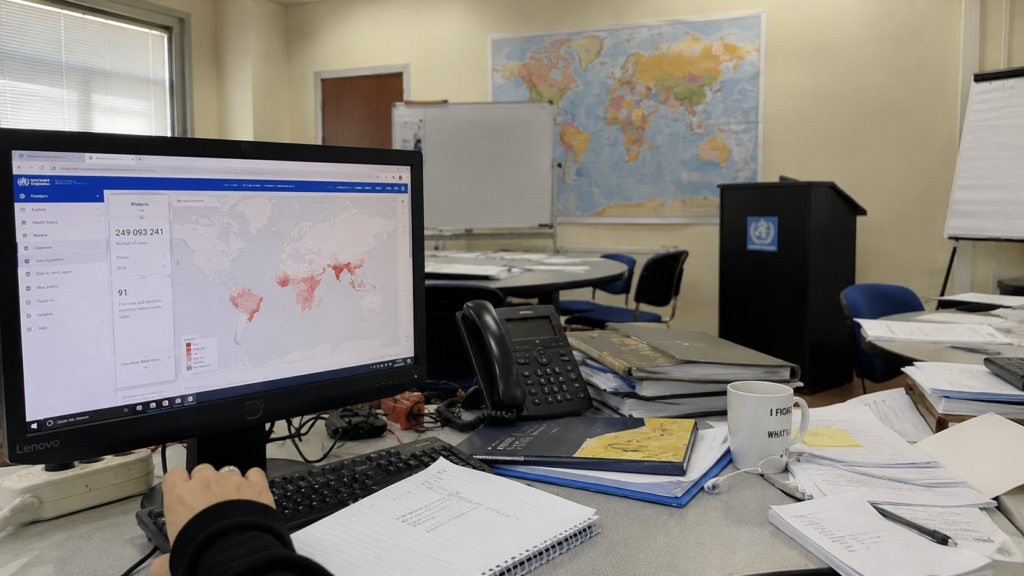
We developed the software for the Global Reporting System for Hepatitis (GRSH), the online reporting platform launched by WHO to operationalise this data collection. The system was built as a DHIS2 module hosted on the WHO Integrated Data Platform, the same infrastructure underpinning several other WHO data systems we have worked on over the years.
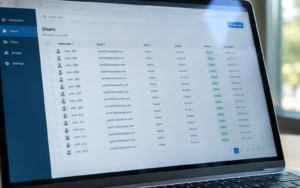
The design made a deliberate choice about access. Each WHO Member State is provided with unique login credentials to enter data directly for each reporting year through DHIS2’s web interface. Critically, this means that even countries that do not use DHIS2 for their own national health reporting can still participate in the global system, without needing to adopt DHIS2 domestically first. The GRSH acts as a neutral, accessible entry point for all 194 Member States.
The reporting process follows a structured annual cycle: WHO headquarters, through its regional offices, sends a data request to Member States; national focal points access the platform and complete the relevant indicators; WHO validates the submissions and uses the aggregated data to publish global progress reports and inform the strategy.
Why the architecture matters
Hosting the GRSH on DHIS2 within the WHO Integrated Data Platform was a practical and strategic choice. It leverages a platform that WHO regional teams already understand and support, keeps hepatitis data alongside related disease burden and health system data for cross-programme analysis, and allows the reporting interface to evolve — including simplifications to the indicator set and the addition of policy question modules — without rebuilding the underlying infrastructure.
In 2022, the 75th World Health Assembly endorsed a renewed Global Health Sector Strategy on viral hepatitis extending to 2030, reinforcing the reporting requirements and keeping the GRSH at the centre of WHO’s monitoring framework.
A familiar challenge at a different scale
The core problem here is one EyeSeeTea encounters across many of our projects: how do you collect structured, comparable data from a large number of heterogeneous actors, consistently, over time? In the case of the NRC dataset configuration work, that meant building configurable tools for humanitarian field teams. Here, it meant building a system where the “field workers” are national governments, the form is the GRSH reporting interface, and the dashboard sits at WHO headquarters in Geneva.
The technical approach differs; the underlying logic is the same. Data that cannot be collected reliably cannot drive decisions. And in global public health, decisions that cannot be grounded in data cost lives.