The Trifermed Social Impact on Health awards recognise individuals and organisations that drive meaningful contributions to healthcare. This year, one of the awardees is someone we have worked with and admired for a long time: Dr. Pedro Albajar Viñas, representing the WHO programme for the control of Chagas disease.
Dr. Albajar is a Spanish-Brazilian physician and researcher specialising in tropical medicine and Neglected Tropical Diseases (NTDs) at WHO, and responsible for coordinating the global response to Chagas disease. For more than two decades, he has worked to bring visibility to a disease that, despite affecting millions of people worldwide, has remained one of the most overlooked in global health.
“The concept of neglected tropical diseases was launched in 2005 to define a group of diseases suffered by one out of every six inhabitants of the planet. These diseases are the result of poverty, precarious housing conditions, conflicts, environmental changes, droughts, deforestation, migrations… In other words, they are indicators of limited or deteriorated planetary health. And all this, in a vicious cycle, anchors these affected populations in poverty.”
Dr. Pedro Albajar Viñas
What Chagas disease actually does
Chagas disease, caused by the parasite Trypanosoma cruzi, was included in the first WHO list of neglected tropical diseases. It is a disease that compounds its medical burden with social ones: fear, shame, stigma and exclusion from the workplace create barriers that keep people from seeking diagnosis and treatment, reinforcing the same cycle of poverty that makes the disease more prevalent to begin with.
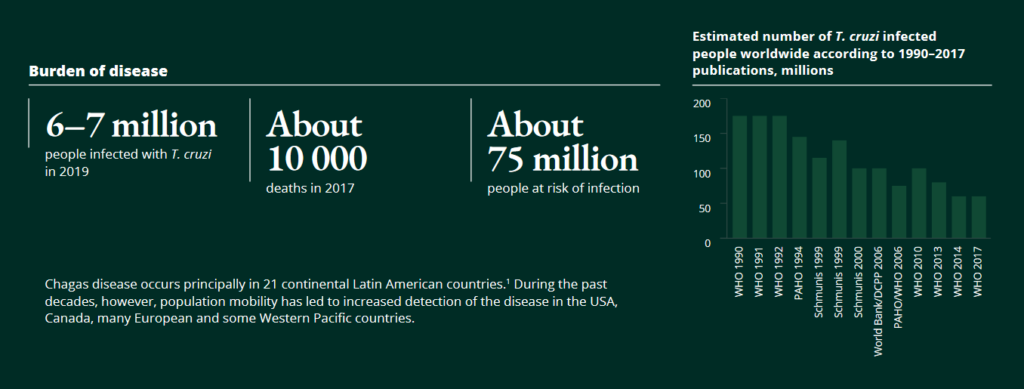
According to WHO, more than seven million people worldwide are infected, but around 90% have not yet been diagnosed. Dr. Albajar puts the medical stakes plainly:
“The paradox is that, with prevention, early diagnosis and treatment, and a life-long accompaniment of people, infection, disease and its complications could be avoided. Without treatment, one third of people have heart involvement and in one in ten, the digestive system, or neurological, or a mixture of all.”
The WHO Chagas Disease Control Programme began in 2008, after recognising the need for greater visibility and better coordination across institutions working on the disease. The Trifermed award recognises that this collective effort has led to significant advances in diagnosis, treatment and prevention, built on an approach that emphasises equity, community engagement and cross-sector collaboration.
[Image: Chagas disease infographic]
WIDP and the end of epidemiological silence
From the start, the Chagas programme was built on the principle that coordinated data is the prerequisite for coordinated action. One of the key instruments for achieving this has been the WHO Integrated Data Platform (WIDP).
As Dr. Albajar describes it, WIDP “is the result of a pioneering open source big data project, which since 2011 has been progressively developed with the invaluable collaboration of the Polytechnic University of Catalonia, EyeSeeTea and several other institutions and organisations.” Its initial purpose was specific: to break the epidemiological silence around people affected by Chagas disease, by organising and systematising variables and information sources for monitoring one of the most neglected conditions in global health.
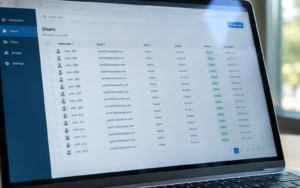
[GIF: WIDP NTD monitoring interface]
Thanks to WIDP, for the first time global Chagas data collection:
- operates at global scale, with epidemiological comparability across countries
- prioritises real data on cases and transmission routes over estimates
- enables monitoring in time and space, tracking changes as they happen
- allows verification of progress against the WHO Neglected Tropical Diseases roadmap 2021-2030
WIDP runs on DHIS2, the world’s largest open source health information management system. Countries and institutions enter their data either directly through DHIS2 forms or in bulk using our Bulk Load app: download an Excel template, fill it with your data, and upload it through a simple interface. This approach has allowed diverse networks working on disease control to report their data in a coordinated, comparable way, without requiring deep technical expertise at the point of entry.
EyeSeeTea has been part of the WIDP project since 2011, providing development, maintenance and platform support. The Chagas programme’s use of WIDP is one of the clearest examples of what the platform was designed for: connecting institutions across borders around a shared data model, so that global epidemiology can be tracked with the same rigour as national-level reporting.
On keeping going
Since 2019, Chagas disease has its own World Day on 14 April, created specifically to help it shed its reputation as a “silent and silenced” disease. The Trifermed award, by recognising Dr. Albajar and the WHO programme publicly, contributes to exactly that visibility.
There is still a long way to go. But the combination of sustained scientific commitment, institutional cooperation, and data infrastructure that actually reaches the people entering the data has produced real progress. We close with Dr. Albajar’s own words, which say it better than we could:
“Nothing is done. Nothing is given. Nothing has been simple, easy, fast, cheap… Everything is the result of a self-sacrificing and sustained effort. Yes, we need to continue working to place the new instruments at the service of the human being… And yes, we need to continue to meet the challenge of creating new networks and increasing human interoperability, listening, co-creating, implementing and assessing costs, impacts and added values together…. Yes. We firmly believe that each and every one of us, in our site, work, task…., can help rewrite this story…, for the sake and possibility of a healthy future for each individual, and for all of us, collectively, as humanity, in relation to our planet.”