When a government health supervisor visits a rural clinic to assess the quality of malaria care, what happens to the data they collect? Until recently, across much of sub-Saharan Africa, the answer was: it went onto a paper checklist, then into a database somewhere, then, eventually, into a report. By then, the moment to act had often passed.
This project came to EyeSeeTea through Knowtechture, a British technology company that subcontracted us for the development. The application was funded by PATH through the United States President’s Malaria Initiative (PMI)-funded MalariaCare project, a programme that ran from 2012 to 2017 supporting national malaria control programmes across eight countries in sub-Saharan Africa: the Democratic Republic of the Congo, Ghana, Kenya, Malawi, Mali, Mozambique, Tanzania, and Zambia.
What supportive supervision actually involves
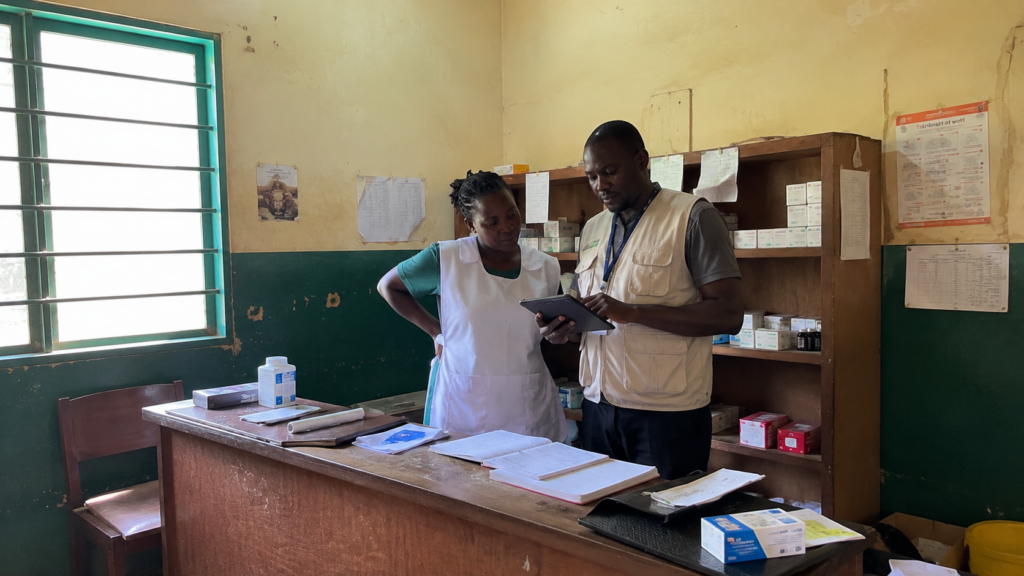
MalariaCare’s model for improving malaria case management was built around Outreach Training and Supportive Supervision (OTSS): trained government health personnel visiting health facilities to directly observe how clinicians managed febrile patients, using a standardised checklist to assess performance across areas like diagnostic testing, treatment decisions, and patient referral. After each visit, supervisors provided individualised feedback and worked with the facility on an action plan.
Between 2012 and 2017, the programme supported 5,382 supervision visits to 3,563 health facilities across the eight countries. That is a substantial data collection effort, and it was, initially, running largely on paper.
The problem is familiar to anyone who has worked in health systems: paper-based supervision data is slow to aggregate, prone to transcription errors when entered manually into a database, and by the time it reaches a programme manager it reflects a reality that is weeks or months old. The supervision visit generates insight at the facility; the data system needs to carry that insight upward quickly enough to act on it.
The Electronic Data System
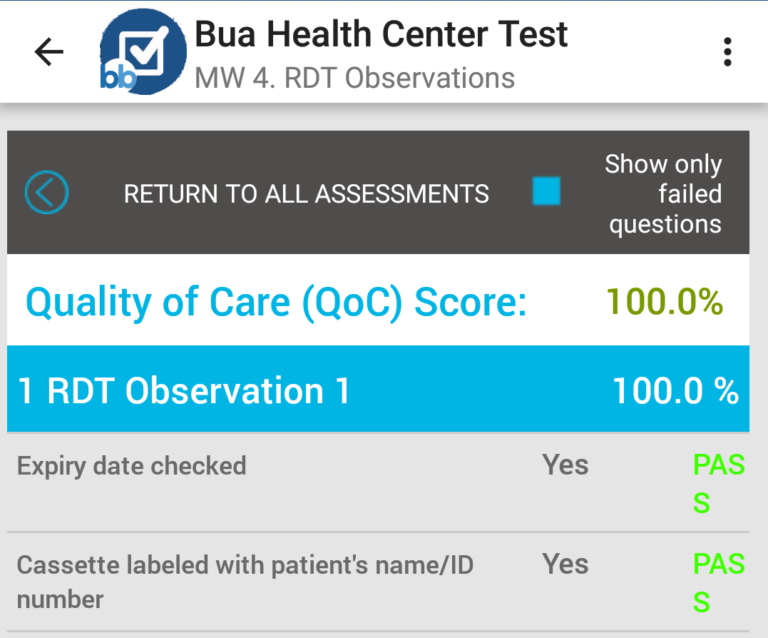
EyeSeeTea developed the MalariaCare Electronic Data System (EDS), an open source Android application built on DHIS2 that replaced the paper checklist with a direct digital entry point. The app synchronises with DHIS2 in an initial setup process, pulling down the programme’s data elements and turning them into structured surveys and questionnaires that supervisors complete on an Android device during the visit itself.
The design addressed three specific constraints of the supervision context:
Offline functionality was essential. Health facility supervision happens in rural and remote areas where network connectivity is unreliable. The app captures data locally and synchronises to the DHIS2 server when a connection is available, so the absence of a signal at the facility never interrupts the visit.
Configurability by Ministries of Health was a core design principle. The EDS was built to allow national programmes to create and adapt their own digital assessment forms within the DHIS2 framework, without requiring custom development for each country or each round of supervision. The same app could serve different national programmes with different checklist structures.
DHIS2 as the backbone meant that data flowed directly into the same platform Ministries of Health were already using for health information management at national level, making supervision data immediately accessible alongside other programme data for analysis and decision-
making.
The EDS was adapted from Population Services International‘s Health Network Quality Improvement System (HNQIS), an earlier tool EyeSeeTea had also worked on, building on an established model for digital supervision and extending it for PATH’s programme requirements.
The impact, documented
A peer-reviewed study published in the American Journal of Tropical Medicine and Hygiene documented the effect of introducing the EDS across the MalariaCare programme. The findings were clear: the introduction of the EDS led to dramatic improvements in both completeness and timeliness of data on the quality of care provided for febrile patients. Health facilities with complete scores increased significantly across supervision rounds, and the data reached programme managers far faster than the paper-based system had allowed.
For a programme whose purpose was improving the quality of malaria case management across thousands of health facilities, having faster and more complete data on what was actually happening in those facilities was the difference between supervision that informed decisions and supervision that produced reports.
Part of a broader ecosystem
Like our malaria case reporting work in Myanmar, the EDS sits within EyeSeeTea’s broader experience building QuestMark-based Android applications that connect field-level data collection to DHIS2. The pattern is consistent across contexts: take a process that is generating important information on paper, build a tool that captures it digitally and offline, connect it to the platform the programme is already using, and let the data start doing the work it was always supposed to do.
The EDS code is open source under GPLv3 and available on GitHub.