Building a DHIS2 Android app from scratch takes time, expertise, and resources that most organisations working in global health do not have spare. QuestMark was our answer to that problem.
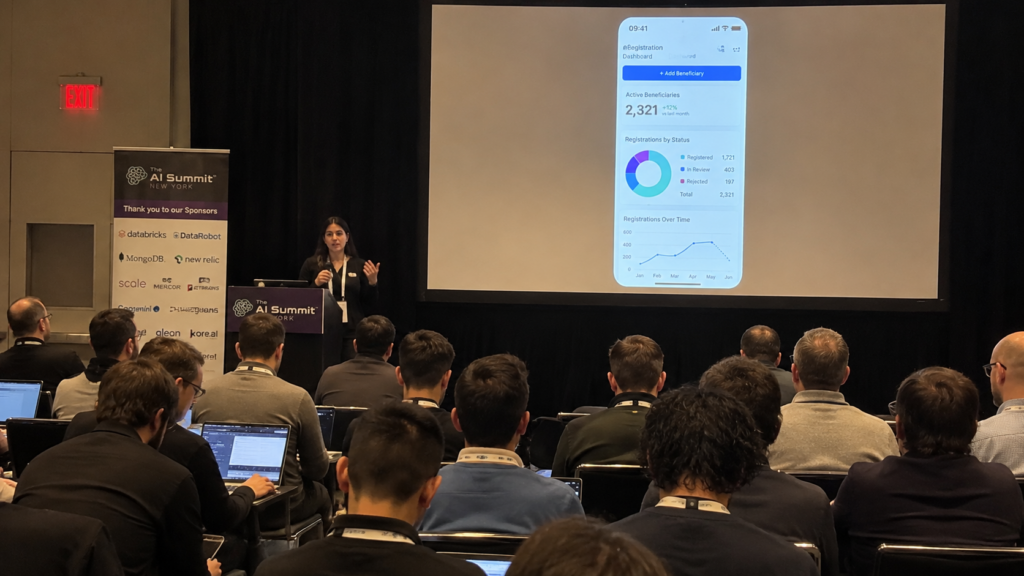
EyeSeeTea presented QuestMark at the DHIS2 Symposium, the annual gathering of the global DHIS2 community that has since grown into the DHIS2 Annual Conference. It was an opportunity to share with the community a framework we had been developing out of a very practical need: the gap between what DHIS2 can do and what field workers can actually interact with on an Android device.
The problem QuestMark was built to solve
DHIS2 is a powerful platform. It can handle data collection, monitoring, logistics, and analysis across some of the most complex health systems in the world. But its native interfaces are designed for administrators and data managers, people who understand how the system is configured and what its concepts mean. Field workers in low- and middle-income countries are often a different audience entirely: community health workers who may have limited digital literacy, operating in areas with poor or no connectivity, under time pressure, using an Android phone as their primary device.
The conventional solution is to build a bespoke app for each programme. That works, but it means rebuilding the same core logic — DHIS2 synchronisation, offline data storage, metadata-driven form rendering — every time. Multiply that across NGOs, research organisations and international health consultancies, and you have a vast amount of duplicated engineering effort producing tools that each solve the same underlying problem in slightly different ways.
What QuestMark does
QuestMark (QM) is an open source Android framework that abstracts that shared logic into a reusable foundation. It connects to a DHIS2 server, synchronises data and metadata, and then uses that metadata to automatically generate a graphical interface that field workers can use without understanding anything about how DHIS2 works underneath.
The framework translates DHIS2 concepts into three types of intuitive workflows:
- Data collection — such as malaria case surveillance apps, where field workers enter patient data through a guided form generated directly from DHIS2 programs and data elements.
- Monitoring and evaluation — such as quality assessment tools, where supervisors complete structured observations at health facilities and scores are calculated automatically.
- Logistics management — such as per-clinic stock control, where supply data is captured offline and synchronised back to DHIS2 when connectivity is available.
Each deployment of QuestMark is a QuestMark Variant (QMV): a customised version of the framework configured for a specific programme, with its own data model, workflows, and interface, but sharing the same underlying architecture. This means organisations can commission a new app without commissioning a new codebase.
Why the architecture matters
The framework’s design separates responsibilities clearly: a modular system handles the different functional areas (forms, synchronisation, reporting, offline storage), while a clean internal architecture keeps them independent enough that changing one does not break the others. That matters in global health contexts where requirements change mid-project, connectivity is unreliable, and the same technical team may need to support multiple variants simultaneously.
Critically, QuestMark is open source, which means developers in target countries can contribute to it, adapt it, and extend it. The framework grows from the community that uses it, rather than depending entirely on EyeSeeTea to maintain every variant in every context.
Part of a broader commitment
Presenting at the DHIS2 Symposium was a chance to put QuestMark in front of the people who could use it most: implementers, developers, and programme managers building data systems across Africa, Asia and Latin America. The DHIS2 community has always operated on the principle that knowledge shared across the ecosystem produces better outcomes than knowledge kept inside any single organisation. QuestMark is an expression of that same principle, applied to Android development.
You can find out more about QuestMark and its applications on our dedicated page, and explore our broader suite of open source DHIS2 tools on GitHub.