In humanitarian work, the quality of the data you collect determines the quality of the decisions you can make. That connection is easy to state and hard to operationalise when your programmes span 31 countries, six sectors, and thousands of field workers operating under pressure.
The Norwegian Refugee Council (NRC) is one of the world’s leading independent humanitarian organisations, helping people forced to flee their homes. Their work covers camp management, food assistance, clean water, shelter, legal aid and education, delivered by around 14,000 humanitarians, the majority of them hired locally in the field. In 2017 alone, NRC assisted 8.7 million people across some of the most complex humanitarian contexts on the planet.
Behind that scale sits a data challenge that is equally complex.
The challenge: meaningful data across a fractured landscape
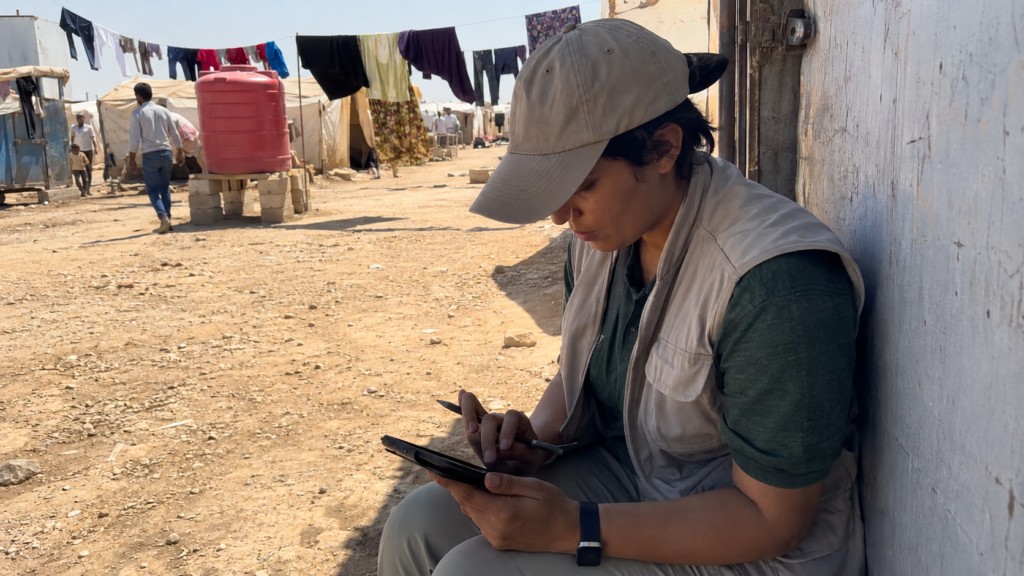
Evaluating the impact of humanitarian aid depends on collecting structured, comparable data from the field. But NRC’s programmes vary enormously: the indicators relevant to a shelter programme in South Sudan differ from those needed for a legal aid operation in Lebanon. A food security team in one country works with different datasets from an education team in another. And at field level, the people entering data are community workers, not data specialists.
The traditional response to this problem is to build bespoke solutions per programme or per country. The cost is a fragmented data ecosystem where cross-programme analysis becomes slow, error-prone, and dependent on a handful of technical staff who understand how each system was built.
NRC needed a different model: a single platform flexible enough to serve all their programmes, without requiring a developer every time a new dataset was needed.
The solution: a dataset configuration app built on DHIS2
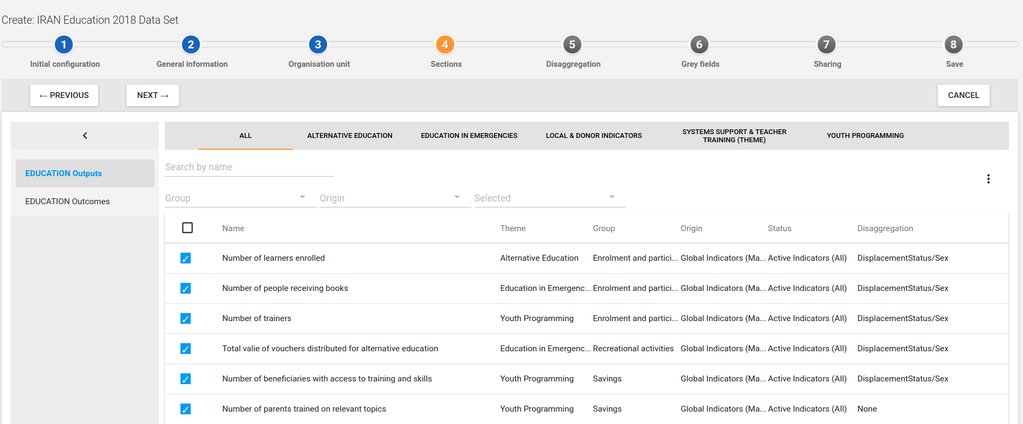
EyeSeeTea developed the Dataset Configuration Web App as part of a broader suite of custom DHIS2 applications for NRC. The core idea was to give NRC administrators the power to create and configure datasets themselves, through a form wizard that guides them through the process without requiring technical knowledge of DHIS2’s underlying architecture.
Each dataset can be configured according to the specific needs of a project, an aid area, or a country. Administrators define the questions, the structure, the disaggregations, and the organisational units in scope, all through an interface designed for programme staff, not developers. Once configured, the datasets are distributed to field workers who complete them directly in DHIS2.
The results speak to how quickly the tool was adopted: NRC had configured more than 400 datasets, with over 100 actively in use across their operations.
The wider suite: recording, correcting and managing users
The Dataset Configuration App sits alongside two other applications EyeSeeTea built for NRC as part of the same engagement.
Dataset Recording gives users the ability to delete, correct and push new data entries, addressing the reality that field data is never perfect on first submission and that programme teams need a controlled, auditable way to manage corrections without bypassing DHIS2’s data integrity model.
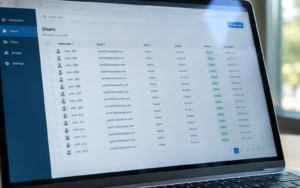
User Enhancement provides a sophisticated user management layer on top of DHIS2’s native capabilities, allowing NRC administrators to manage access at the scale and complexity their global operations require, with bulk actions and entity relationships that the standard DHIS2 user app was not designed to handle at that level. The same underlying approach later became the foundation for our User-Extended App, now available to the wider DHIS2 community.
Extending DHIS2 where it needed to go
All three applications extend DHIS2‘s core capabilities rather than replacing them. A significant part of the technical work focused on the pivot tables and visualisation layer: enabling indicators to be created on a DataSet attribute basis, and giving users a way to define calculated items in pivot tables using other fields from the same table — something DHIS2’s standard configuration did not support out of the box.
EyeSeeTea also provided second-tier technical support for NRC’s DHIS2 platform, sitting behind NRC’s own team and handling escalations that required deeper platform expertise.
All code is open source under GPLv3 and available on GitHub:
When the tool disappears, the work can begin
The measure of a good data tool in a humanitarian context is whether field workers spend their time thinking about the people they are helping, or about the software. The Dataset Configuration App was built to make the second question irrelevant: administrators configure once, field workers collect, and programme teams analyse data that is structured, comparable and ready to correlate outputs with outcomes.
That is the kind of work we find most meaningful: building the infrastructure that lets others focus on what actually matters.