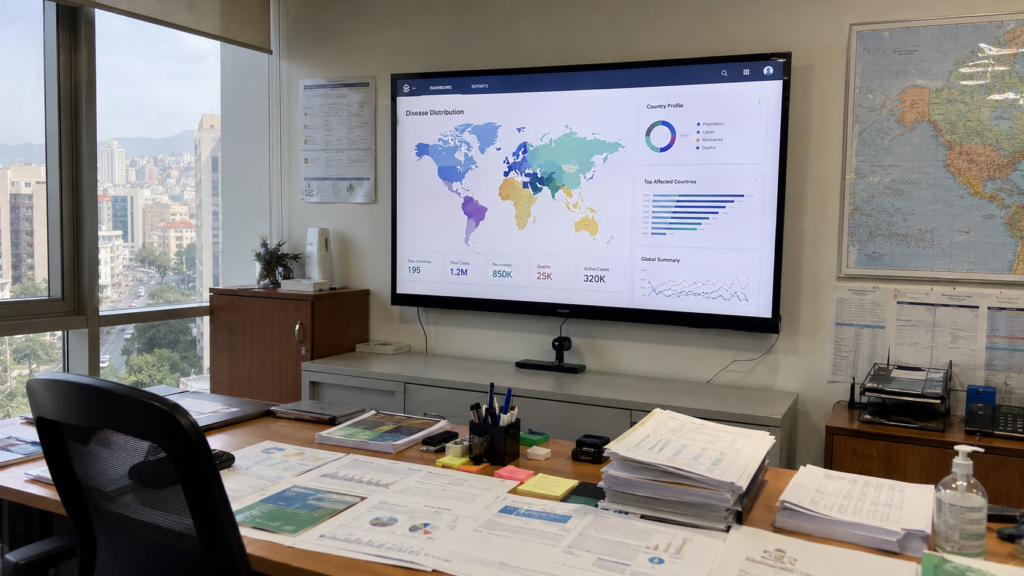
More than one billion people live in areas where leishmaniasis is endemic. It is a disease that disproportionately affects the world’s poorest communities, is preventable, treatable and curable, and has historically been starved of the epidemiological data needed to fight it effectively. That last part is changing.
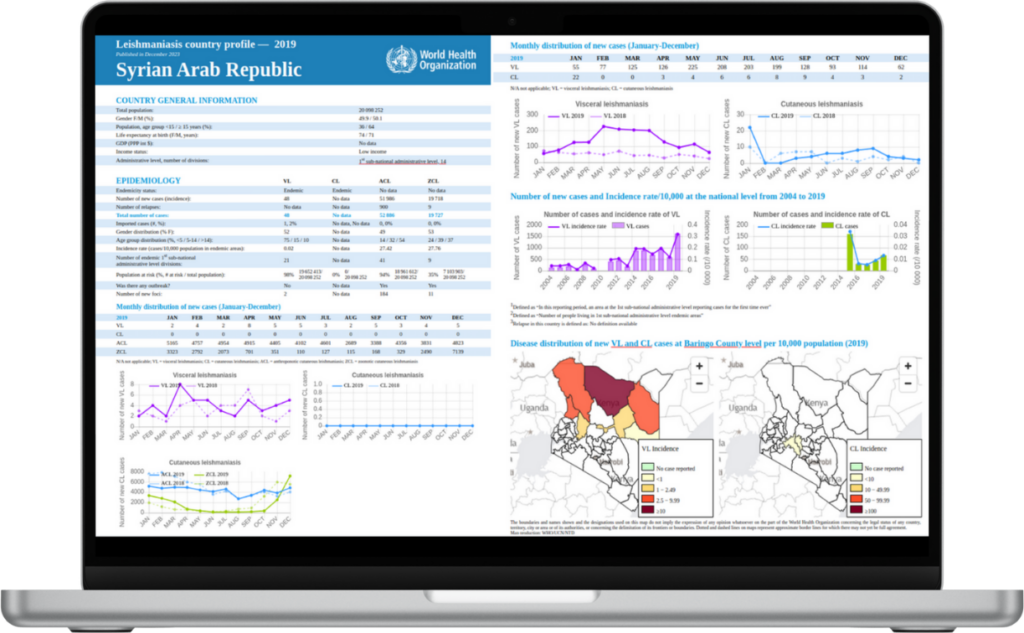
Leishmaniasis is a major public health problem across four regions: the Americas, East Africa, North Africa, and West and South-East Asia. Since 2017, WHO has been publishing country profiles for the disease, making detailed surveillance data publicly available for the first time. EyeSeeTea contributes to the platform that makes those profiles possible.
“We have created a standardised country profile that will allow national programmes to make better use of their own routine surveillance data and to compare it with other countries.”
Dr José A. Ruiz-Postigo, Medical Officer, Global Neglected Tropical Diseases Programme, WHO
What the country profiles contain
The profiles are built from data submitted by Member States and cover a detailed breakdown of the epidemiological picture in each country: new, relapse and imported cases, populations at risk, number of people screened, proportion of positive rapid diagnostic tests, treatment outcomes including initial cure, and more.
High-burden countries access expanded forms with additional variables: disease distribution by gender and age group, monthly case counts, subnational-level breakdowns, diagnostic test volumes and results, and treatment outcomes by medicine. A set of core indicators has been standardised across the dataset so countries can adapt forms to their specific needs while maintaining comparability at regional and global level.
This level of detail had never before been available for leishmaniasis. It directly strengthens the ability of national control programmes to evaluate their own performance, identify gaps in surveillance, and benchmark against comparable contexts.
The platform behind the profiles
The WHO Neglected Tropical Diseases department evaluated several systems before deciding that DHIS2 was the right tool to collect and process this data. It now does so through the WHO Integrated Data Platform (WIDP), the shared infrastructure used by nine WHO departments that EyeSeeTea has maintained almost from the beginning.
Nacho Foche, EyeSeeTea’s director, describes the shift: “Initially, data was collected through phone calls and manually entered into Excel sheets. There was always the chance for human error, and the level of detail collected was very low. We now have a system in place that provides genuinely valuable epidemiological insight, allowing experts to effectively combat the disease.”
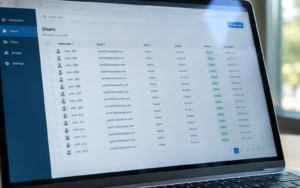
For countries that have difficulty operating through the web-based forms, the system is configured to accept data submitted via Excel using Bulk Load, our open source import tool from the EyeSeeTea DHIS2 Suite. A Member State can fill in a structured template and upload it directly to WIDP, without requiring DHIS2 expertise at the country level.
“Any project conducted by WHO is a project we are honoured to be part of, but in this case, when it is one that tackles neglected diseases, we are especially proud of contributing. It is another case where we can also see the huge impact of open source tools such as DHIS2.”
Nacho Foche, director of EyeSeeTea
What the data enables
Data captured through WIDP feeds three public outputs. Country profiles are published online and updated as new submissions arrive. Interactive dashboards in the WHO Global Health Observatory make the data accessible to researchers, policy advisors and public health practitioners worldwide. Articles in the Weekly Epidemiological Record translate the data into analysis for the global public health community.
All of it is publicly available and built on open source infrastructure.
“The Leishmaniasis Country Profiles App was one of the first projects I worked on when I joined EyeSeeTea. It was incredibly exciting to play a role in developing such a game-changing app. This experience opened my eyes to the immense potential of DHIS2 in addressing challenges like this.”
Ana García Peral, Senior Developer at EyeSeeTea
A neglected disease, with better data
Leishmaniasis remains one of the world’s most neglected diseases precisely because the communities most affected by it have had the least visibility. Better surveillance data is part of how that changes: when national programmes can see their own numbers, compare them with neighbouring countries, and track trends over time, they can make better decisions about where to focus prevention, screening and treatment resources.
The country profiles are one tool among many. But they are a tool that did not exist before 2017, built on a platform that continues to grow, and available to every researcher, health officer and programme manager who needs them.