“<<Our fourth strategic priority is powering progress – by harnessing science, research, innovation, data, and digital technologies.>>”
Dr. Tedros Adhanom Ghebreyesus, 2022

The World Health Organization (WHO) is accelerating its digital transformation by strengthening its corporate backbone for data. In recent years, WHO has conducted consultancies and initiatives to centralize digital tools, harmonize information, and enable more scalable and interoperable ways to manage health data across programs and countries.
The challenge: data harmonization at scale
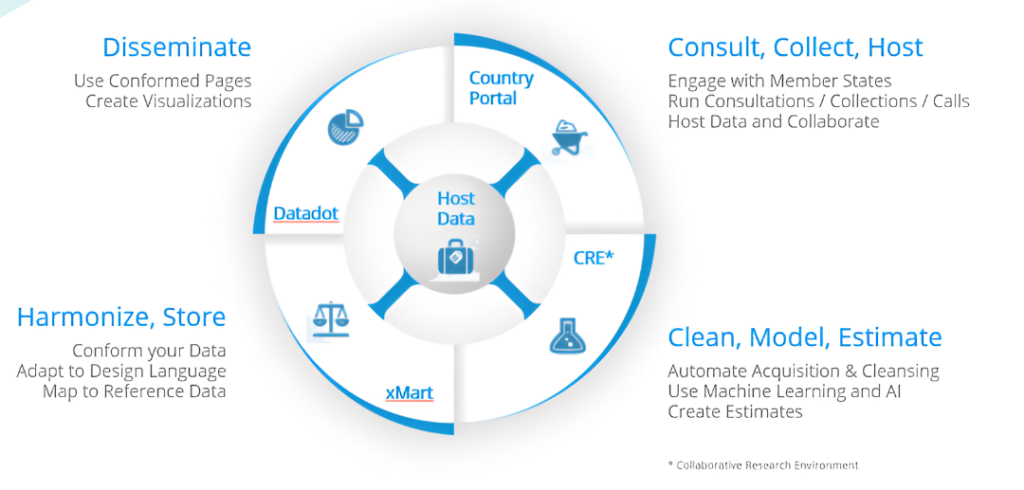
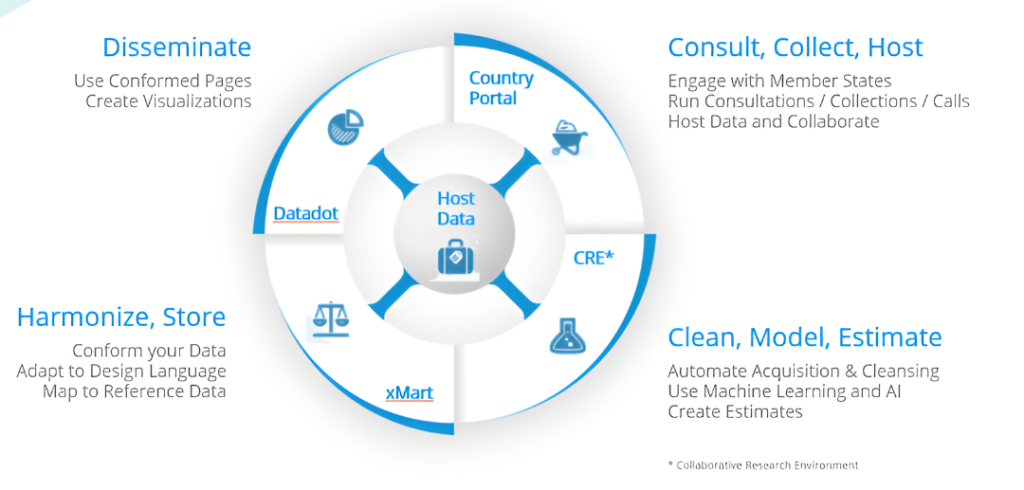
As part of this corporate strategy, WHO adopted xMART as a core solution for data harmonization and warehousing.
xMART is a database system enriched with features to interconnect databases, execute transformations, and expose harmonized information through a powerful OData API.
At the same time, DHIS2 was initially defined as a key corporate tool for data collection, often working as the country portal for national reporting. Within WHO’s largest DHIS2 installation — integrated in WHO digital platforms — departments increasingly needed to move DHIS2 data into xMART in order to represent and visualize it using corporate tools such as Datadot, which has become a de facto standard for visualization.
However, connecting these two ecosystems was not straightforward.
The pipeline creation challenge
While xMART provides a programmatic way to read external APIs, it did not yet offer an easy graphical interface for retrieving and harmonizing data from external sources. This meant that transferring DHIS2 data into xMART often required a manual process, using xMART pipelines built and maintained by technical profiles. That approach created barriers:
- High dependency on specialized knowledge
- Manual steps to create and maintain pipelines
- Lower scalability when many departments and datasets are involved
- More friction for teams that want to publish or visualize data quickly
To support WHO’s corporate strategy, a robust interoperability solution that could act as a link between both systems became essential.
The solution: xmart2DHIS — a DHIS2 webapp developed by EyeSeeTea
To address this need, EyeSeeTea developed xmart2DHIS, a modern DHIS2 web app that empowers WHO teams to seamlessly transfer DHIS2 data into xMART through an intuitive and guided interface.
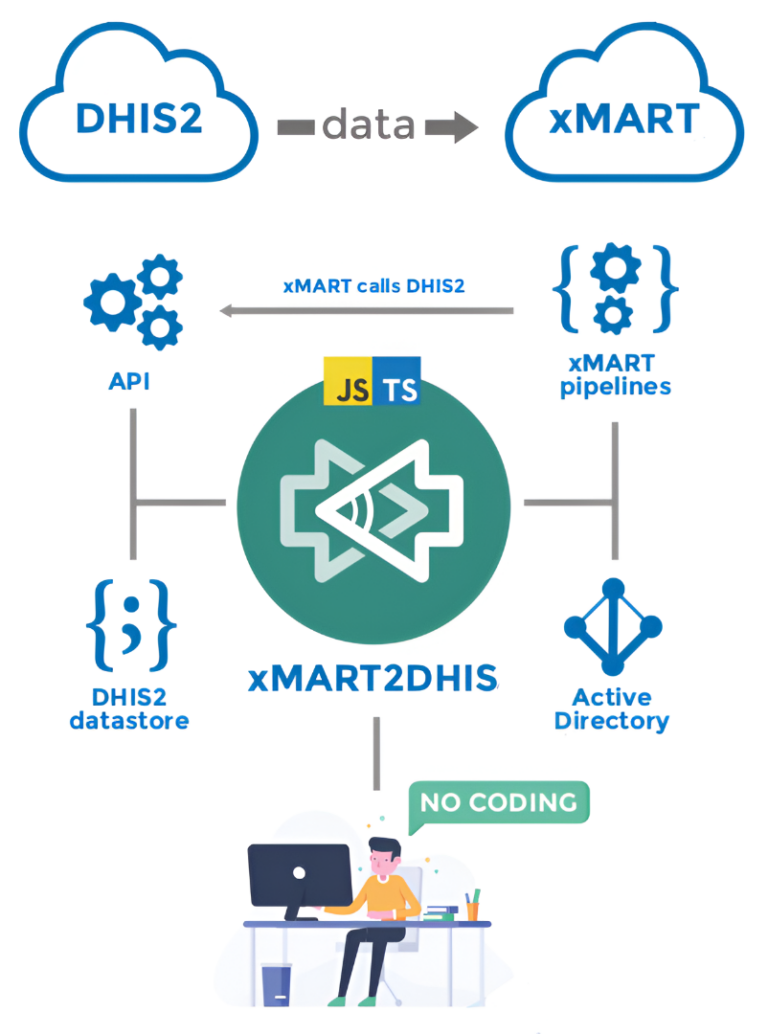
Instead of relying on manual pipeline work, xmart2DHIS guides users through the creation of a structured pipeline in the dataMART. From there, the application takes control and performs all necessary modifications without requiring manual intervention. Users do not need to understand xMART internals to harmonize and transfer data.
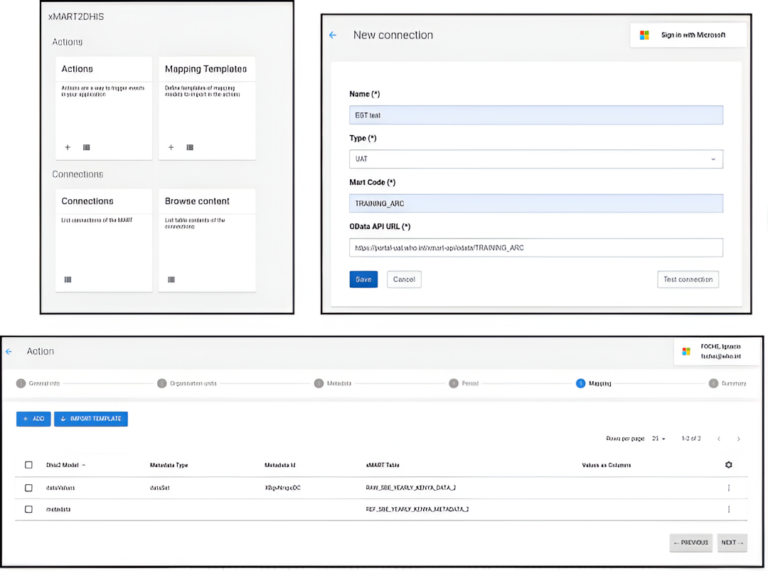
How it works: mapping DHIS2 to xMART
xmart2DHIS offers an accessible way to connect both systems by providing:
- A user-friendly configuration of xMART connections
- A mapping layer between DHIS2 models and dataMART tables
- A guided workflow that supports teams in creating consistent transformations
- A more sustainable way to operationalize xMART pipelines from DHIS2 data
Impact: strengthening DHIS2’s role in the WHO ecosystem
By enabling interoperability with xMART, xmart2DHIS significantly increases the value of DHIS2 within WHO’s digital ecosystem. It ensures that DHIS2 data is not “trapped” inside the system — instead, it becomes interoperable with corporate solutions and available for harmonization, analytics and visualization across WHO.
With xmart2DHIS in production, DHIS2 becomes a stronger, more viable option for data collection because:
- Data can flow into WHO’s harmonization and warehousing layers
- Teams can reduce manual pipeline work
- Departments can more easily align with the corporate data backbone
- Interoperability supports the adoption of corporate visualization standards
WHO’s drive to harness data and digital technologies requires solutions that connect platforms, reduce friction and enable scalable transformation. With xmart2DHIS, EyeSeeTea contributes to this strategy by providing a robust and user-centered interoperability layer between DHIS2 and xMART, strengthening the ability of WHO teams to harmonize and use health data across systems — efficiently, reliably, and without requiring specialized coding skills.